Trapping
Rat Removal in Walnut Creek
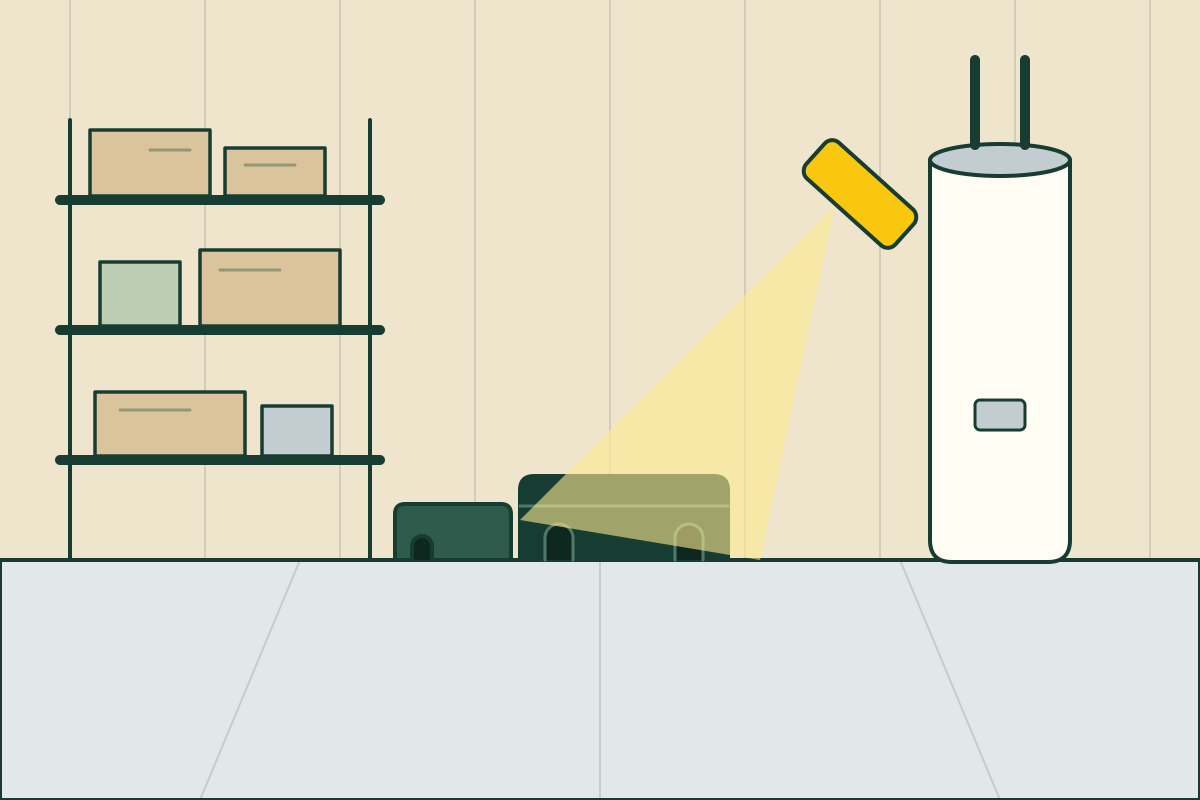
Rat removal in California today means trapping: snap traps set in tamper-resistant stations where the rats travel, checked on follow-up visits until activity stops, then sealing so new rats can’t replace them. A California guide puts trapping at about $250–$600+.
The program
What a trapping program looks like
- 01
Find the runways
Droppings, rub marks and gnawing show where rats travel. Traps go there, not in the open.
- 02
Set traps in stations
Snap traps inside tamper-resistant boxes along walls, beams and pipes in the attic, crawl space or garage.
- 03
Follow-up visits
Traps are checked, reset and moved on return visits, often over several weeks, until catches stop.
- 04
Remove carcasses
Trapped rodents are bagged and removed on each visit; nothing is left to decay in a wall.
- 05
Seal and confirm
Entry points are sealed and traps watched for a final quiet period before they come out.
Placement
Roof rats and Norway rats are trapped differently
UC IPM recommends placing traps where each species travels:
- Roof rats (the climbers common in oak-wooded neighborhoods): on ledges, shelves, branches, fences, pipes and overhead beams.
- Norway rats (burrowers): close to walls, behind objects and in dark corners at ground level or in the crawl space.
Rats are wary of new objects, so a good program expects to move traps and adjust bait rather than set and forget.
Poison
Why most companies don’t lead with bait anymore
California has prohibited residential use of the anticoagulant rat poisons that used to be standard: the second-generation baits under AB 1788, diphacinone from 2024 under AB 1322, and chlorophacinone and warfarin from 2025 under AB 2552 (CA Department of Pesticide Regulation). Bait also tends to leave rodents dying inside walls. Trapping avoids both problems.
After trapping
Seal, or they come back
Removing rats without closing the openings invites the next group in, especially in neighborhoods with oaks, ivy and fruit trees. Sealing is usually quoted as a separate line item; ask for both together. See rodent proofing.
Questions
Frequently asked
How long does rat removal take?
Often a few weeks. Traps are set on the first visit, then checked and moved on follow-ups until catches stop. Larger infestations or homes with many entry points take longer, and sealing is what keeps the result.
What is the 5-day rule for rats and mice?
It is a rule of thumb, not an official standard: if a trap catches nothing for several days, move it to a spot with fresh signs. No university or government source sets a specific five-day number.
How do I get rid of rats fast on my own?
UC IPM calls snap traps the safest, most effective and most economical way to trap rats. Set several along walls or travel routes, keep them away from kids and pets, and wear gloves when handling. Seal entry points too, or new rats will move in.
Do I need to remove dead rats?
Yes. Carcasses cause odor and attract insects. Follow CDC cleanup steps (gloves, disinfectant soak, bag it) or have it removed. See the cleanup guide.
How much does rat removal cost?
A California guide puts trapping and baiting at $250–$600+ and dead rodent removal at $150–$350+. Sealing is extra. See the cost page.
Next step
Get the house looked at
Call for the quickest answer, or send the form and expect a call back to set up an inspection and a written quote.
- Entry points found and listed
- Trapping, sealing and cleanup priced separately
- Warranty terms in writing
Sources used on this page
- UC IPM Pest Notes: Rats (University of California, updated June 2025)
- California DPR: Diphacinone restricted-material status, prohibitions and allowed uses (AB 1322)
- California DPR: Chlorophacinone and warfarin prohibitions and allowed uses (AB 2552)
- Pest Control California: How much does a rodent exterminator cost in California? (March 2026)
- CDC: How to Clean Up After Rodents